
Piscataway Roofing provides gutter installation in Piscataway, NJ, serving surrounding cities including Middlesex, Highland Park, Bound Brook, Metuchen and Manville. After more than 20 years working on roofs here, we treat gutters as the last part of the roofing system rather than an add-on, because every gallon a roof sheds has to go somewhere. Our gutters and leaders are sized and pitched for the roof above them, so rainwater leaves the house instead of soaking the foundation.
Most gutter problems we see come from the wrong size, the wrong pitch or the wrong discharge point rather than from the gutter material itself. A 5-inch gutter under a steep roof with a valley above it will overflow in every heavy storm, and a leader that empties against the wall puts that water where it can reach the basement. Fixing those details is what separates a gutter installation that works from one that only looks finished.
We install seamless aluminum gutters and matching leaders on houses, townhouses, small apartment buildings and commercial properties. When the roof is being replaced at the same time, the gutters are planned with it, so the drip edge, fascia and gutter line all come together as one job.
Residential Gutter Installation
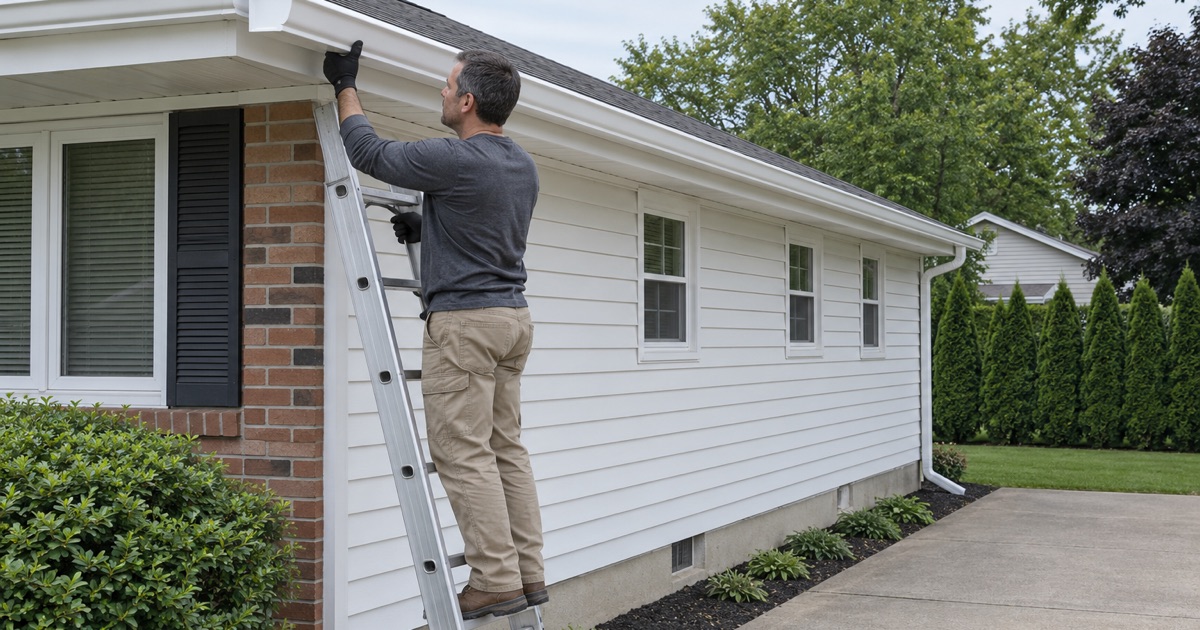
Seamless Aluminum Gutters Formed On Site
Seamless gutters are rolled from aluminum coil on a machine at the house, cut to the exact length of each wall and hung in one piece. Without the joints every 10 feet that sectional gutters have, there are far fewer places for sealant to dry out, for water to drip onto the fascia and for ice to pry the gutter apart in winter. The only joints left are at the corners and outlets, where they are sealed and riveted.
The aluminum comes factory-finished, so it does not need painting and holds its color for years. We choose a color with you to match the trim, the roof or the siding, and the leaders are made from the same coil so the whole system reads as one.
Sizing Gutters and Leaders to the Roof
A gutter’s job is to carry the water from the roof area above it, and that area varies a lot around one house. A long rear slope, a valley that funnels two roof planes into one corner or a steep front gable all deliver more water than a short porch roof, so we size each run to its own drainage area instead of using one size everywhere.
Leaders matter as much as gutters. A larger gutter feeding a small leader still backs up, so we size leaders and choose outlet locations to move water off the roof as fast as it arrives. On some houses an added leader in the middle of a long run does more good than a bigger gutter.
Pitch, Hangers and Fascia Attachment
Gutters need a steady pitch toward the outlets so water does not sit in them, freeze or breed mosquitoes. We set the pitch with a line along each run, then fasten the gutter with hidden hangers into solid fascia at close spacing so it does not sag under wet leaves or snow.
If the fascia behind an old gutter has rotted, it is replaced before the new gutter goes up, because a new gutter screwed into soft wood pulls loose within a season or two. The repair is priced on its own line so you can see it.
Drip Edge Behind the Gutter
Drip edge is the metal strip along the roof’s edge that directs water into the gutter instead of letting it curl back under the shingles and onto the fascia. Many older homes have none, and the result is rotted fascia and water stains on the soffit even when the gutter itself works perfectly.
When we install gutters, we check the drip edge and add it where it is missing, tucking it under the first course of shingles and over the back of the gutter. It is a small detail that protects the wood behind the gutter for as long as the gutter is up.
Discharge Away From the Foundation
The roof’s water is only handled once it is away from the house. We place leaders where the ground slopes away, add extensions or splash blocks where needed, and avoid emptying them onto walkways where water freezes into ice in the winter.
On homes with past basement water, the gutters and leaders are often the cheapest place to start. Getting the roof’s water several feet from the foundation removes a large source of the problem before anyone digs.
Gutter Guards and Ongoing Care
Choosing a Gutter Guard
Gutter guards range from simple screens to solid hoods and fine micro-mesh panels that sit on top of the gutter. Under oaks and maples that drop heavy leaves every fall, a good guard can cut cleanings down sharply and keep leaders from clogging.
We match the guard to the trees around the house and to the roof’s pitch, since some designs shed water poorly from steep roofs during heavy rain. The guard is installed so it does not lift or crack the first course of shingles at the roof edge.
When Guards Are Not Worth It
On a house with few trees nearby, guards add cost without much benefit, and an occasional cleaning does the same job. Pine needles and seed pods can also collect on top of some guards, so they are not maintenance-free anywhere.
We would rather tell you that up front than sell a product you do not need. If guards make sense later, they can be added to seamless gutters without replacing the gutters themselves.
Commercial and Multifamily Gutters
Larger Gutters, Scuppers and Downspouts
Commercial buildings and apartment buildings often have larger roof areas, parapet walls and low-slope roofs that drain through scuppers into collector boxes and downspouts. Those systems need larger gutter profiles and leaders sized to the roof area, along with heavier hangers that hold up to ice and long runs.
We size and install these systems with the building’s drainage design in mind, matching the outlets to the roof’s scuppers or drains so water leaves the roof in the places it was designed to.
Leaders on Multiple Dwellings
Buildings with three or more units are multiple dwellings under New Jersey’s maintenance code, which expects roofs and leaders to be kept in good repair and free of leaks. Broken or disconnected leaders on an apartment building are a common maintenance item for those inspections.
For landlords, we schedule gutter work around tenants and send photos after each visit, so the owner has a record of the repair without needing to be on site. Leaders that discharge onto shared walkways are rerouted so tenants are not crossing ice in the winter.
Gutters on Older Piscataway Homes
Fascia and Trim on 1950s-1970s Houses
Nearly half of the township’s homes were built between 1950 and 1979, and many still have original fascia boards behind gutters that have been replaced once or twice. Years of overflow and missing drip edge leave that wood soft, and it is often only discovered when the old gutter comes down.
On homes built before 1978, painted fascia and trim may contain lead paint, and the EPA’s Renovation, Repair and Painting rule sets lead-safe work practices for disturbing it. We plan fascia replacement on older houses with those practices in mind.
Gutters Installed With a New Roof
When a roof is replaced, the drip edge, the bottom course of shingles and the gutter line all meet at the same edge. Installing new gutters as part of the roof job means the drip edge laps correctly over the gutter, the hangers go into fresh or repaired fascia, and no one has to disturb the new roof edge later.
We list the gutters as their own line on the roofing scope, so you can see their cost separately and decide whether to replace them now or keep the existing ones.
Our Step-by-Step Gutter Installation Process
Step 1: Measure and Assess
We measure each run, note the roof area and pitch above it, and check the fascia, drip edge and existing leader locations. That assessment decides gutter size, leader size and where the outlets go.
Step 2: Written Price
You get a written price listing gutters, leaders, guards if chosen and any fascia or drip edge repair on separate lines. Nothing is folded into a single figure.
Step 3: Remove, Repair and Hang
Old gutters come down, damaged fascia is repaired, drip edge is added where missing, and the new seamless gutters are formed on site and hung with hidden hangers at the right pitch.
Step 4: Leaders, Testing and Cleanup
Leaders and extensions are installed so water discharges away from the foundation, and the system is tested with water. Old gutters and debris are hauled away, and the yard is cleaned before we leave.
- 20+ Years Roofing
- Itemized Written Estimates
- Attic-to-Ridge Leak Tracing