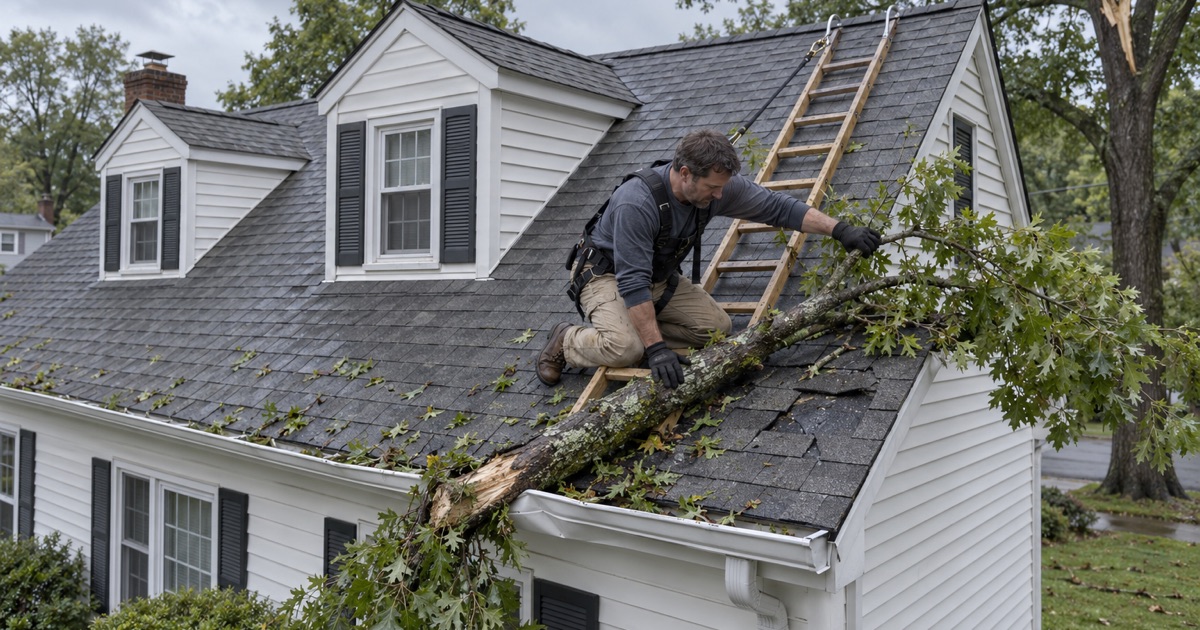
First Steps After Storm Damage
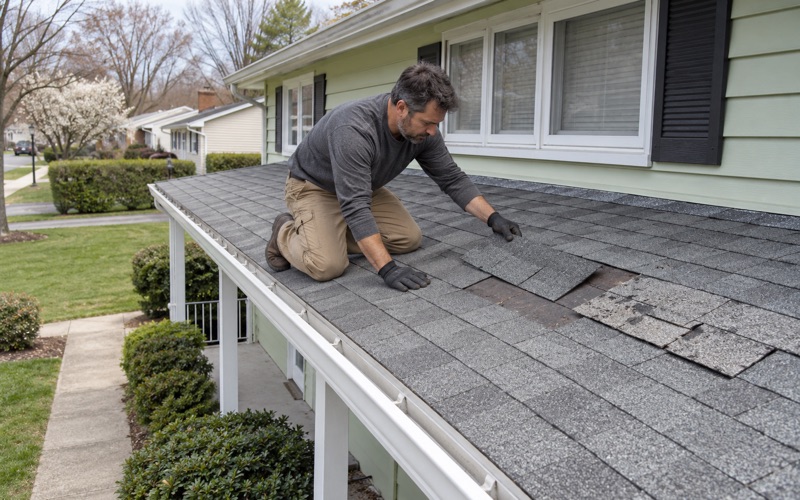
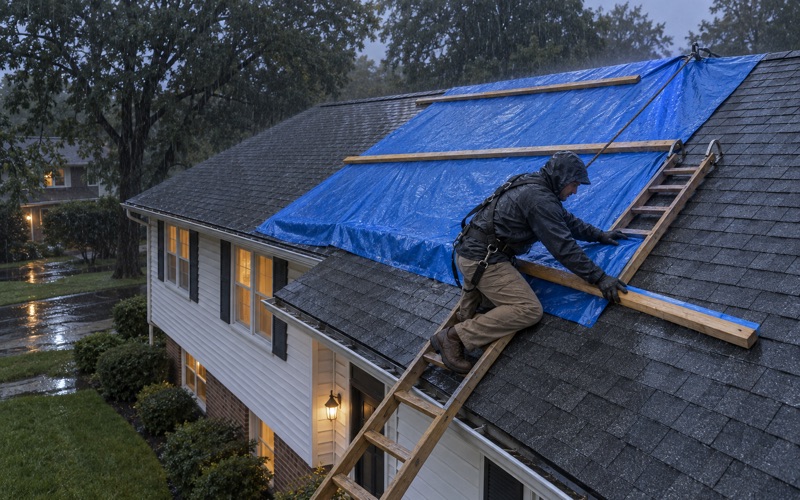
After a storm, photograph the damage from the ground and inside the house before anything is moved, then make temporary repairs to stop more water getting in. Keep every receipt for tarps, materials and emergency work, because those costs can be part of the claim. We photograph and write up the damage for your own claim and can tarp the opening while we are there.
How a Homeowners Roof Claim Works in New Jersey
You report the loss to your insurer, the carrier assigns a claim adjuster, and the adjuster inspects the roof and writes an estimate. New Jersey’s Department of Banking and Insurance notes that you are not required to use a contractor the insurance company recommends. When you ask, our crew meets the adjuster on site to point out the damage, which the department itself says can help when there is a dispute.
Wear and Tear Versus Storm Damage
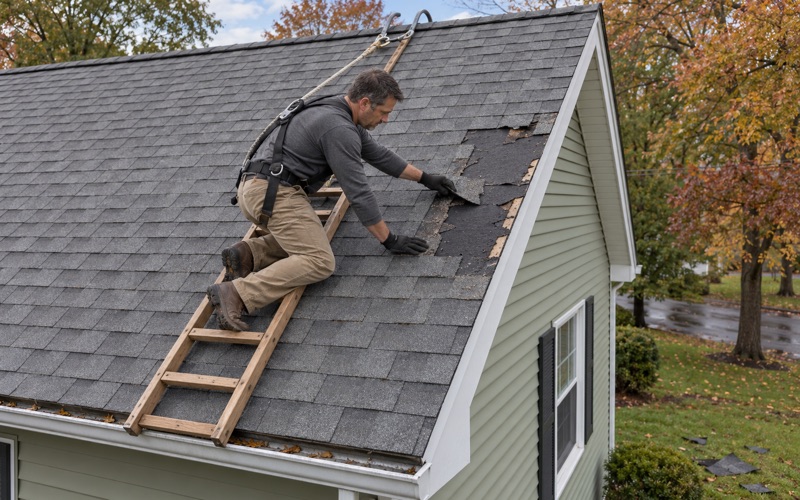
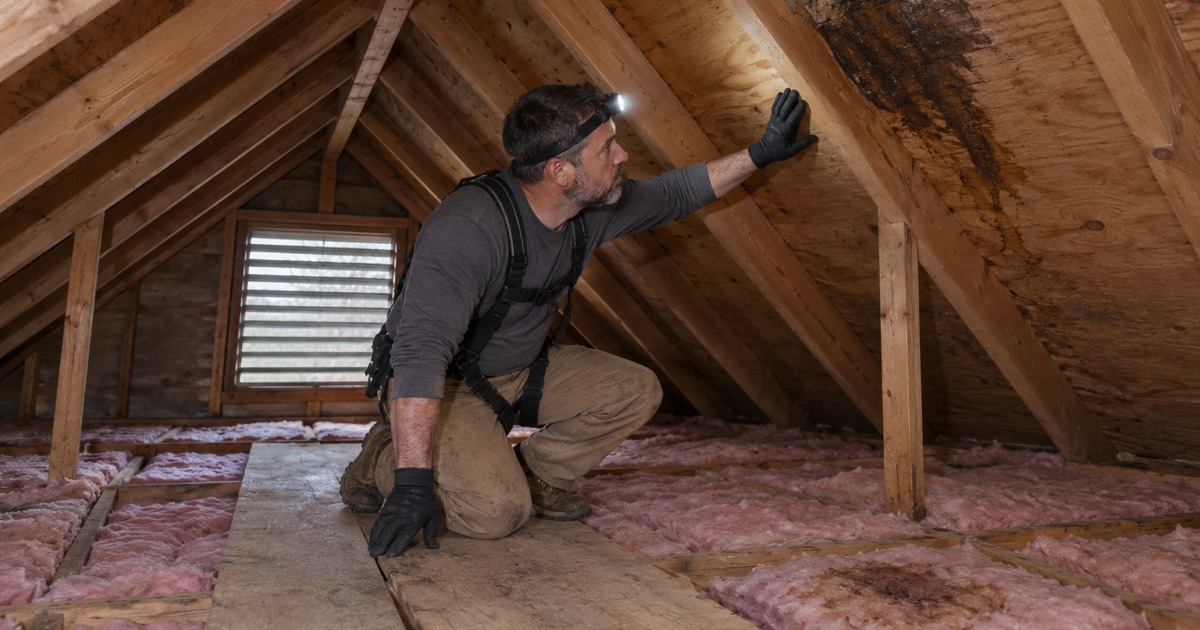
Homeowners policies generally cover sudden damage from wind or hail, not a roof that has worn out over time, and that line is where many roof claims are denied. Missing tabs with fresh, clean edges after a windstorm read as storm damage, while curling, cracking and granule loss across the whole roof read as age. Our write-up separates the two honestly, because a claim built on wear and tear tends to fail.
Public Adjusters in New Jersey
Under New Jersey’s Public Adjusters’ Licensing Act, anyone paid to negotiate a property claim on an insured’s behalf must hold a public adjuster license from the Department of Banking and Insurance. A roofer may describe the damage and speak with the claim adjuster, but may not negotiate your claim. If you want someone to negotiate for you, hire a licensed public adjuster under a written contract that lists the services and the maximum fee.
Sales Tax on a New Roof Versus a Roof Repair
New Jersey treats a full roof replacement as a capital improvement, documented with Form ST-8, so the contractor’s labor on it is not taxed. A repair, such as replacing shingles on part of a roof, is taxable, and if the bill does not separate materials from labor, sales tax can apply to the whole amount. We itemize repair invoices so the tax is figured correctly.
What a Roof Replacement Costs
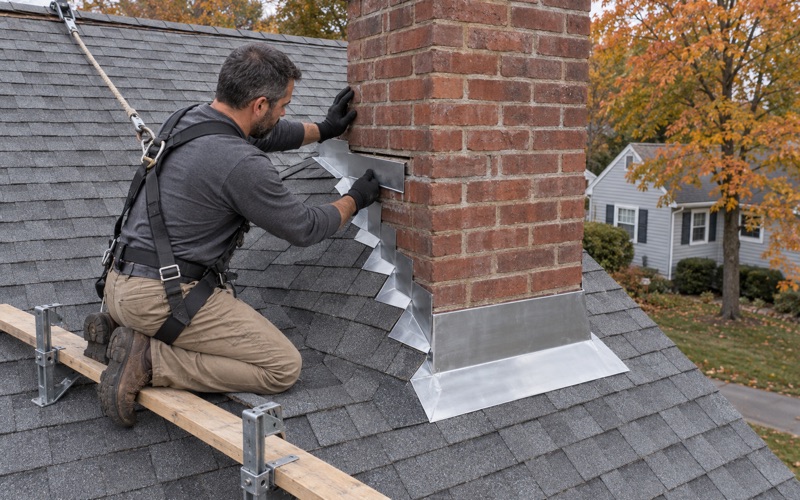
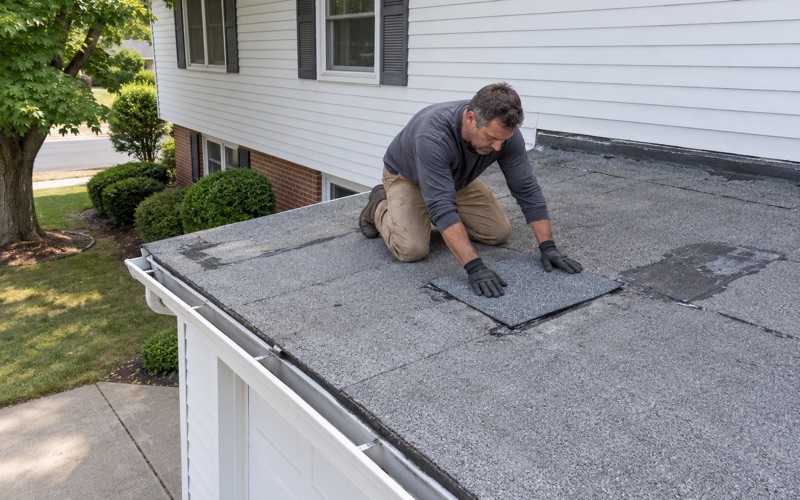
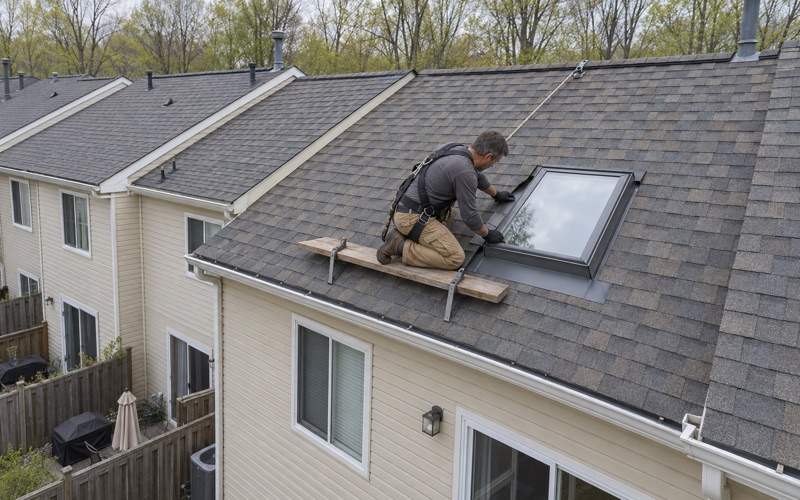
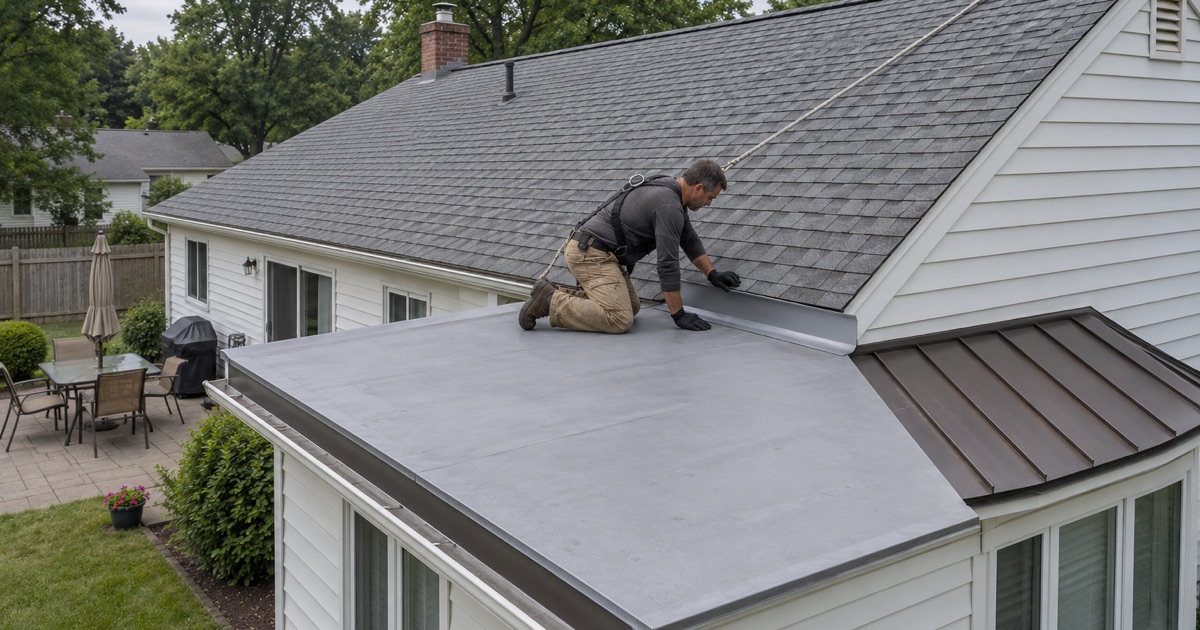
The price of a new roof turns on its size and pitch, the number of layers coming off, how much decking needs replacing, the shingle line chosen, and details such as chimneys, skylights and low-slope sections. A steep colonial with two layers and a chimney costs more per square than a single-layer ranch. Our written estimate breaks those pieces out line by line so you can see exactly what moves your number.
Insuring a 20-Year-Old Roof
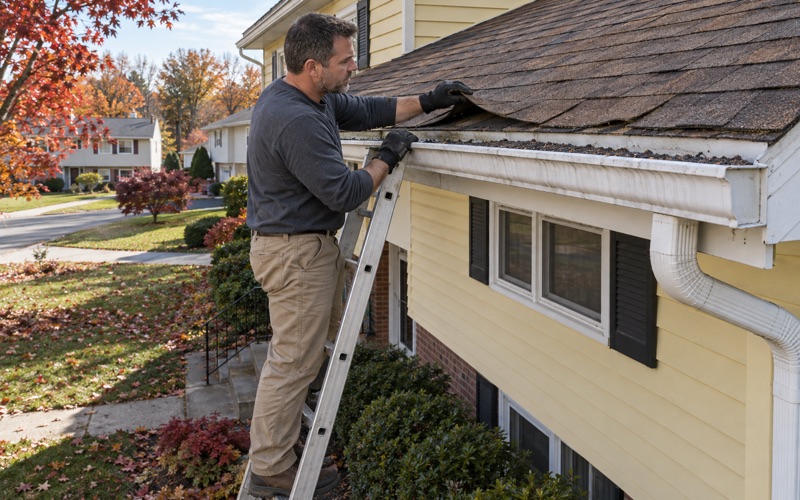
Insurers look at a roof’s age when they write and renew policies, and some pay an older roof on actual cash value rather than replacement cost, which subtracts depreciation from any claim. Read the roof section of your declarations page to see which applies before a storm, not after one. If your roof is near 20 years old, an inspection tells you whether it is storm-ready or due for replacement on your own schedule.
The 25 Percent Rule Is Florida’s, Not New Jersey’s
Many roofing sites mention a rule that repairing more than 25 percent of a roof forces the whole roof to be redone, but that rule comes from the Florida Building Code. New Jersey has no such trigger for a detached house, where re-roofing is ordinary maintenance. Here the questions that matter are how many layers are already on the roof and whether matching shingles are still available.
Roofing License or Registration in New Jersey
New Jersey has no state roofing license, but any contractor doing home improvement work must be registered under the Contractors’ Business Registration Act. Home improvement contracts must be in writing and carry the three-business-day cancellation notice. Ask any roofer for the registration number and check it with the state before signing anything.
When a Roofer Is Injured on Your Roof
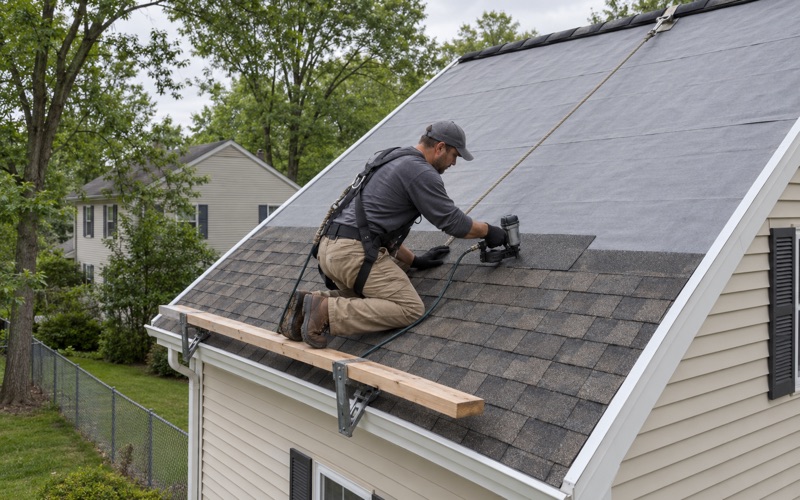
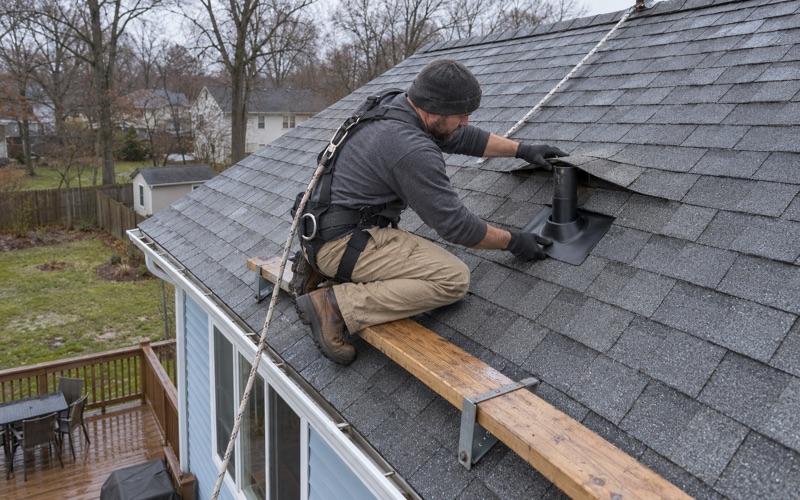
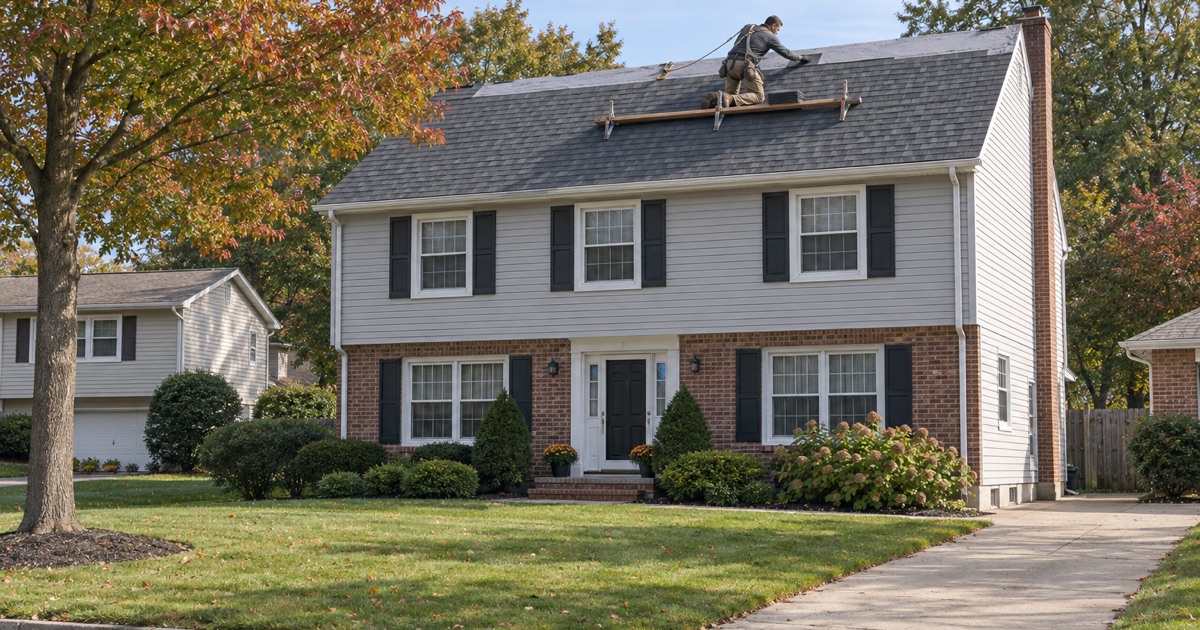
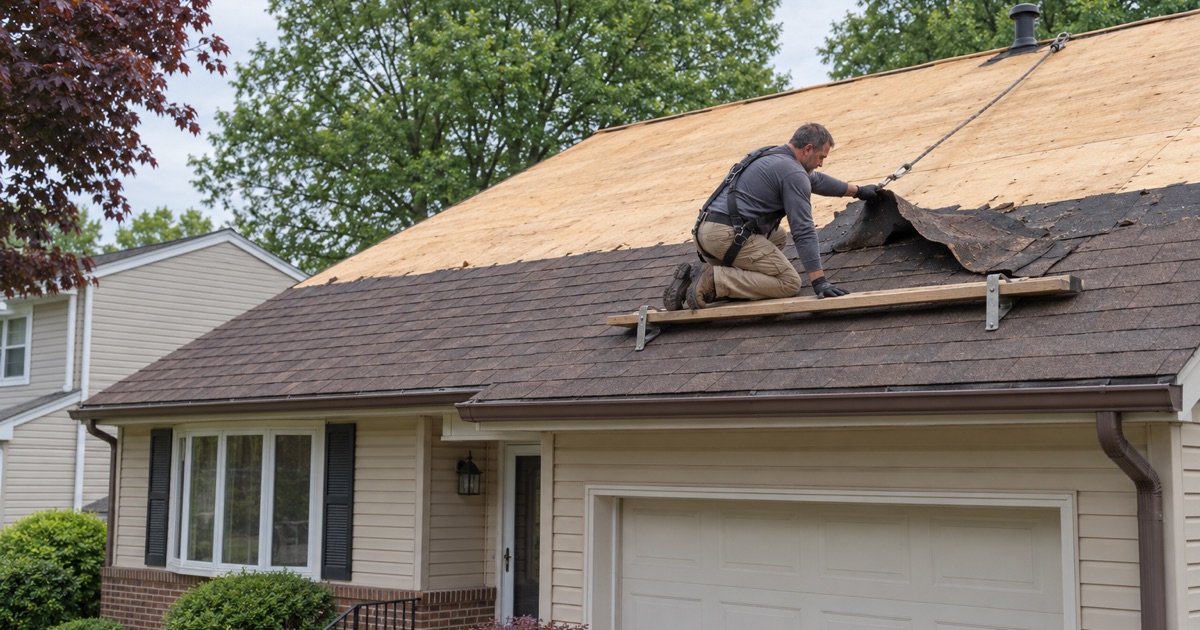
OSHA requires fall protection for residential roofing work at 6 feet and above, and a crew working without it is a risk on your property. Before work starts, ask for certificates showing the contractor carries workers’ compensation and general liability insurance, so an injured worker’s claim goes to the contractor’s insurer rather than to you. Whether a worker can sue a homeowner depends on the facts, so ask your own insurer what your homeowners policy covers.