
Piscataway Roofing provides emergency roof repair in Piscataway, NJ, serving surrounding cities including Middlesex, Highland Park, Bound Brook, Metuchen and Manville. When a limb comes through the roof, wind peels back a section of shingles or water starts pouring through a ceiling, the first job is stopping more water from getting in. After more than 20 years of roofing work, we know how to secure an opened roof quickly and safely, and how to document it so your claim is supported.
An emergency visit has a narrow goal. We cover the opening with a properly secured tarp or a temporary seal, protect the interior from further damage and photograph everything before and after. The permanent repair comes later, once the roof is dry enough to see the full extent of the damage and price it properly.
This area does get the kind of weather that opens roofs. Severe weather reports logged trees and wires down around Piscataway in March 2026, golf-ball-sized hail fell in nearby New Brunswick in September 2023, and a July 2003 storm brought golf-ball hail to the township itself. Those are the events that turn a sound roof into an emergency in a matter of minutes.
What Counts as a Roofing Emergency
Fallen Trees and Limbs
A falling limb can punch through shingles and decking, crack rafters and leave a hole open to the next rain. If a tree is still resting on the house, it needs to come off with a tree service before anyone can safely tarp the roof, because the weight can shift as it is cut. Once the opening is clear, we cover it, check the framing around the damage from the attic and photograph all of it.
The structural check matters. A rafter that cracked under a limb may still hold a tarp but not a permanent roof, and finding that early keeps the repair estimate honest and complete.
Wind Blow-Offs
Strong gusts can lift shingles along a ridge, rake or eave and strip away whole sections down to the underlayment or the bare deck. Once that happens, every following gust can take more, and the next rain goes straight into the attic. We tarp the exposed area, secure loose shingles nearby and note the extent of the damage for the claim.
On low-slope roofs, wind can also peel back the edge of a membrane at a parapet or gutter line. A temporary seal or weighted cover keeps the wind from getting under it until the edge can be properly reattached.
Active Leaks Into the Home
Water dripping through a light fixture, running down a wall or bulging a ceiling needs attention the same day. Inside, we help you protect furniture and electronics, drain a sagging ceiling safely in one spot and identify which part of the roof the water is coming from.
Outside, the source is covered or sealed for the short term. When the weather breaks, the leak is traced properly from the attic to the entry point, which is often some distance from where the water showed up inside.
Emergency Tarping and Temporary Repairs
How a Roof Tarp Should Be Installed
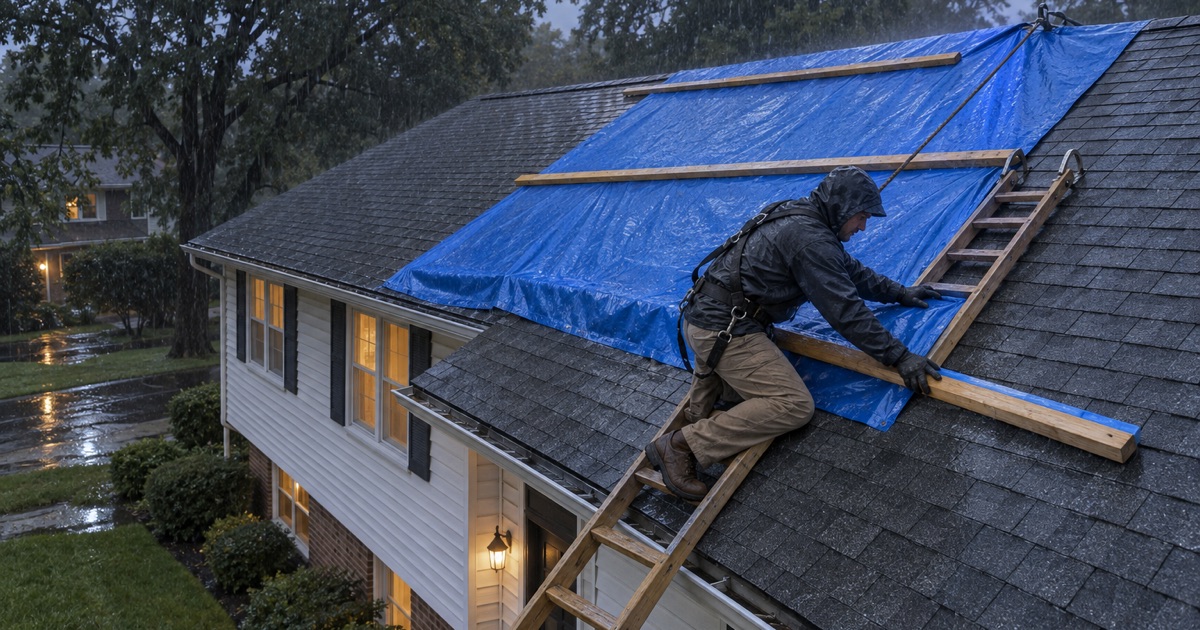
A tarp that is simply weighted down with bricks blows off in the next storm and can tear more shingles as it goes. We run the tarp over the ridge where possible so water cannot run under its top edge, extend it well past the damaged area and fasten it with battens so the load spreads across the roof rather than tearing at a few points.
The goal is a cover that holds through several rounds of weather until the permanent repair is made. It is temporary, but it should not be flimsy.
Temporary Seals on Flat and Low-Slope Roofs
On flat roofs, a tarp is often the wrong tool because water pools on it and finds the edges. Punctures and open seams on EPDM, TPO and modified bitumen roofs can usually be sealed temporarily with compatible patch materials, and clogged drains are cleared so water stops collecting over the leak.
Those temporary seals buy time until the roof is dry enough for a proper welded or bonded repair, which we schedule as soon as the weather allows. A cold or wet membrane will not take a lasting weld or adhesive bond, so rushing that step only repeats the work.
Working Safely on a Damaged Roof
A wet, storm-damaged roof is dangerous, and OSHA requires fall protection for residential roofing work at 6 feet and above. Anyone working on a storm-damaged roof should be tied off to a proper anchor, and no one should go up in lightning, high wind or icing conditions, however urgent the call.
We ask homeowners to stay off the roof as well. Protecting the inside of the house and taking photos from the ground is far safer, and it gives the claim the same evidence.
Protecting Your Insurance Claim
Photos, Receipts and Mitigation
Take photos of the damage inside and out before anything is moved, and keep every receipt for tarps, emergency labor and cleanup. Many policies expect owners to take reasonable steps to prevent further damage after a loss, and those costs are often part of the claim.
We photograph the roof before and after the tarp goes on and write up what we found for your own claim. When you ask, our crew meets the insurance company’s adjuster on site to walk through the damage.
Who Can Negotiate the Claim
In New Jersey, a roofer can document damage and talk with the adjuster, but negotiating a claim for a homeowner is reserved for public adjusters licensed by the Department of Banking and Insurance. If you want representation, hire a licensed public adjuster under a written contract that lists the fee.
You are also not required to use a contractor your insurance company recommends. The choice of who repairs the roof stays with you.
From Temporary Fix to Permanent Repair
Once the roof is dry, we return to scope the permanent repair. That means checking decking, flashing and framing around the damaged area, matching the shingle or membrane, and deciding honestly whether a repair will hold or the damage, combined with the roof’s age, makes replacement the better choice.
You receive a written price with each part listed separately, so it can be compared with the adjuster’s estimate line by line. For landlords, we coordinate the emergency visit and the follow-up around tenants and send photos after each stage.
- 20+ Years Roofing
- Itemized Written Estimates
- Attic-to-Ridge Leak Tracing